
From SWIFT Exclusion to Gold Trading, Russia Strategically Responds to International Sanctions

Russia’s Financial System Adaptations
When Western nations cut several Russian banks from the SWIFT payment system in early 2022, many analysts predicted devastating consequences for Moscow’s financial sector. Several years later, Russia’s strategic countermeasures have significantly mitigated the impact of these international sanctions, revealing significant limitations in the Western approach to economic pressure.
According to Al Jazeera, Russia had been preparing for Western sanctions since its annexation of Crimea in 2014, implementing numerous defensive measures to protect its financial system. A national card payment system (NSPK) launched in 2015 now handles all payments within Russia using cards issued by Russian banks. The central bank also developed a financial messaging system (SPFS) that replaces SWIFT for domestic transactions.
These preparations proved their value when sanctions forced Visa and MasterCard to suspend all cards issued in Russia. According to Responsible Statecraft, “SPFS immediately took over, allowing Western cards issued by local banks to continue working in Russia uninterrupted; the ten major Russian banks banned from SWIFT moved over to SPFS.”
The Gold Strategy and Asset Protection
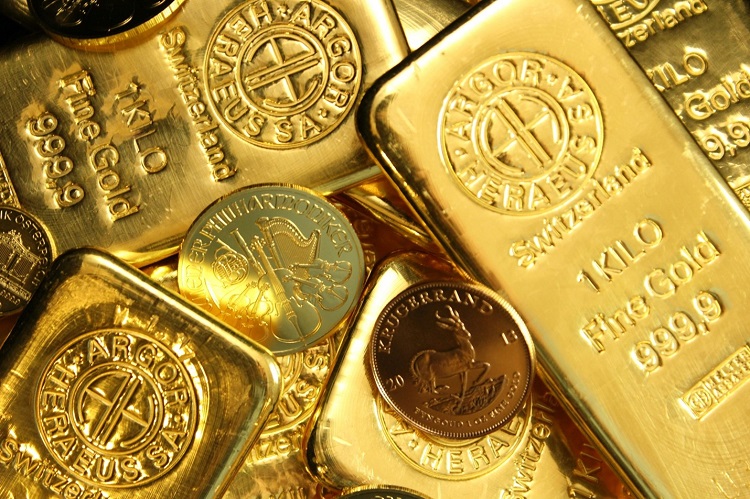
Gold has emerged as a critical component of Russia’s sanctions-evasion strategy. Russia is now the world’s second-largest producer of gold at 324.7 tonnes in 2023, behind China at 374 million tonnes. Production is expected to increase by 4% annually until 2026, providing Moscow with a valuable asset that can be traded outside Western financial systems.
In an even more significant move, Al Jazeera reports that “in early 2022, Russia pegged its currency, the ruble, to gold,” with 5,000 rubles purchasing an ounce of pure gold. This strategy aims to shift the currency away from a pegged value and into the gold standard itself, making the ruble a credible gold substitute at a fixed rate.
This gold strategy has helped Russia maintain financial stability despite sanctions. While Western countries placed financial sanctions on over 1,900 Russian individuals and companies, Russia still has access to approximately $300 billion in reserves (in gold and Chinese yuan), equivalent to the entire reserves of Germany’s Bundesbank.
Trade Reorientation and Economic Resilience
The EU sanctions intended to isolate Russia economically have prompted Moscow to reorient its trade toward non-Western partners. According to Business Insider, trade between Russia and China hit record levels, with Chinese exports to Russia surging by 50%. India increased Russian oil imports by 134%, accounting for almost half of Russia’s seaborne crude trade.
These shifts have been complemented by new payment mechanisms that circumvent Western financial systems. According to Reuters, Chinese President Xi Jinping told Gulf Arab leaders that China would work to buy oil and gas in yuan, supporting Beijing’s goal of establishing its currency internationally. Saudi Arabia has also expressed openness to trading oil in alternatives to the dollar, potentially including the Saudi riyal.
Russia’s trade with BRICS nations has similarly expanded. According to Business Insider, the bloc has invited six new countries to join—Iran, the UAE, Egypt, Argentina, Saudi Arabia, and Ethiopia—potentially creating a more robust alternative to Western-dominated economic structures.
The Shadow Fleet and Energy Exports
Despite Western attempts to limit Russian energy exports, Moscow has maintained significant revenue from oil and gas sales. According to Al Jazeera, the Kyiv School of Economics estimates that Russia will make $178 billion from oil sales in 2023, rising to a potential $200 billion in 2024. These amounts remain substantial despite Western efforts to curtail this critical revenue stream.
A key factor in this resilience has been Russia’s development of a “shadow fleet” of tankers operating outside Western control. This fleet consists of at least 187 tankers carrying Russian crude and refined petroleum products, allowing Moscow to bypass the G7 price cap mechanism. Western protection-and-indemnity-insured tankers dropped two-thirds of their trade in Russian crude between April and October 2023, but the shadow fleet tripled its operations to 2.6 million barrels per day over the same period.
The resulting revenue stability allowed Russian President Vladimir Putin to sign off on a 70% increase in defense and security spending for 2024, to $157.5 billion, according to Al Jazeera. This significant military budget increase demonstrates that sanctions are not working to restrict Russia’s ability to fund its security apparatus.
The Military-Industrial Adaptation
Russia’s military-industrial complex has shown remarkable adaptability to sanctions targeting technology imports. According to Politico, when cut off from Western components, Russia swiftly pivoted to Chinese suppliers. For example, when sanctions restricted access to Western gas turbines from Baker Hughes for the Arctic LNG 2 project, Novatek switched to Chinese supplier Harbin Guanghan.
While sanctions have increased costs and created technical challenges, Russia has found ways to maintain production of critical military hardware. According to The Arctic Institute, Russian projects have continued to advance with Chinese support replacing Western technology, demonstrating the limitations of export control measures in a multipolar global economy.
The Macroeconomic Picture
Russia’s overall economic performance has defied Western expectations. According to Monde Diplomatique, Russia’s GDP grew by 3.6% in 2023 and was projected to expand by another 3.2% in 2024, outpacing all advanced economies. This contrasts sharply with early IMF forecasts that predicted an 8.5% contraction in 2022.
Several factors explain this surprising resilience. Sanctions have functioned as a kind of externally imposed protectionism, boosting domestic production. The withdrawal of many Western firms from the market has created opportunities for Russian companies to expand market share. Additionally, Russia’s structural trade surplus, primarily from raw materials exports, has provided a financial cushion against sanctions pressure.
Reassessing Sanctions Strategy
Russia’s multifaceted response to Western sanctions on Russia highlights fundamental challenges in using economic pressure against major powers with substantial resources and willing trading partners. Moving forward, Western policymakers might consider several adjustments to increase effectiveness.
First, sanctions designs could focus more narrowly on specific military-industrial components and technologies rather than broad economic sectors. Second, enforcement resources could be substantially increased, with greater coordination among implementing countries. Finally, diplomatic efforts to limit third-party cooperation with Russia could be strengthened through both incentives and secondary sanctions.
These refinements would not guarantee success but might enhance the impact of economic pressure while reducing unintended consequences. The Russian experience demonstrates that determined states with sufficient resources and alternative partners can develop effective countermeasures to sanctions, suggesting limits to what economic pressure alone can achieve in today’s multipolar international system.